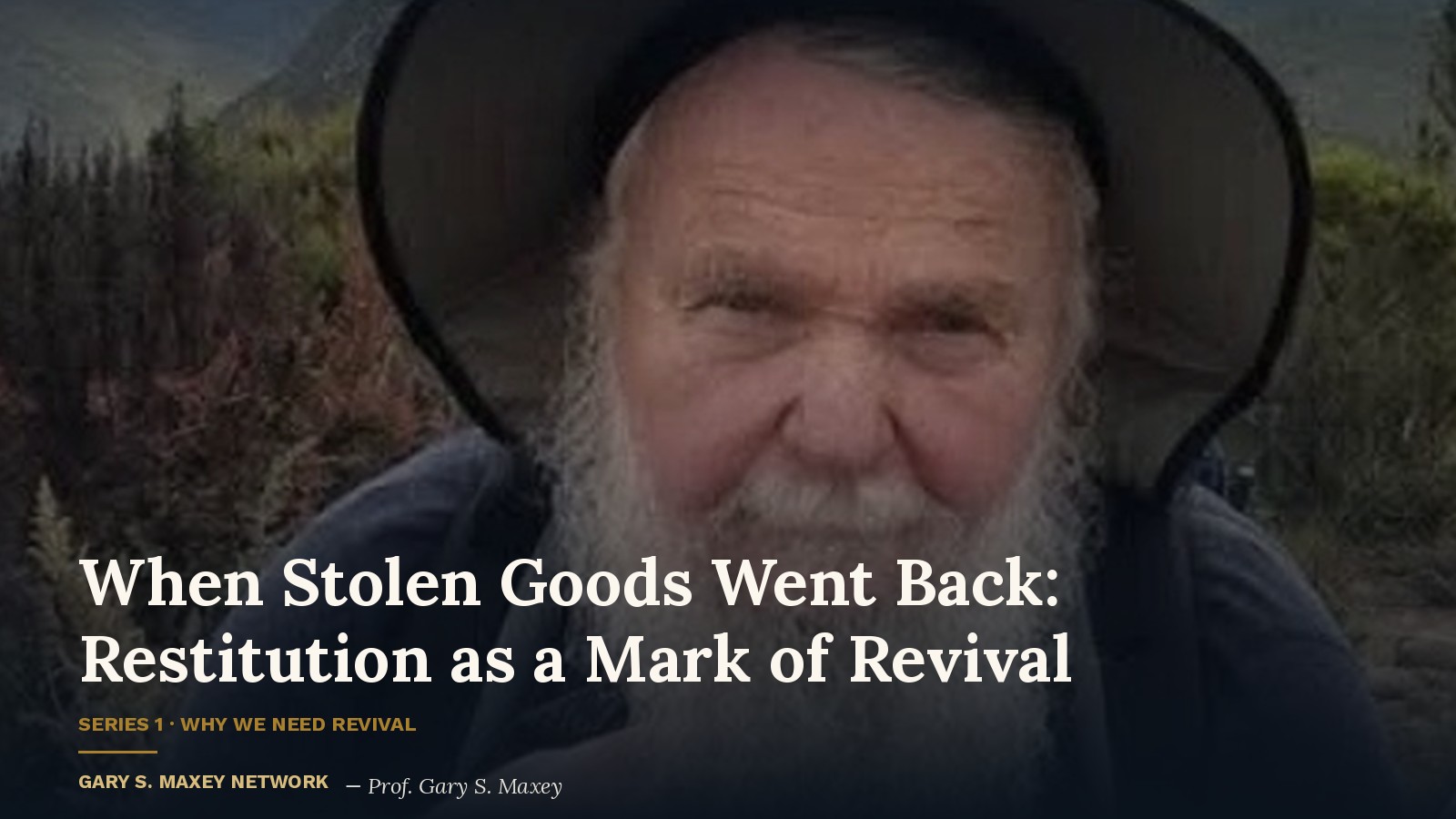
When Stolen Goods Went Back: Restitution as a Mark of Revival
Drawn from the teaching of Professor Gary S. Maxey · 3 min read
One of the strangest complaints in the history of African Christianity came from British colonial officials during the East Africa Revival. They were annoyed. According to Bishop Festo Kivengere, much of their time was being eaten up by people lining up to return stolen property.
The story sounds foreign to modern ears. It is also the clearest sign Professor Gary Maxey knows of a real move of God. His definition of biblical revival includes restitution by name. Repentance that costs nothing, he says, is not repentance.
Why restitution proves the sorrow was real
Anyone can say sorry in a meeting. Few people walk to a neighbor's house with money in hand. Professor Maxey holds that a person who has truly seen his sin wants to put right what he can, and that the desire shows up before anyone asks him.
He sees the same pattern in Bible colleges. When students begin to arrive at his office unprompted, admitting they cheated on an examination, submitted false documents for admission, or took small things that were not theirs, he knows God has begun to move. Nobody had caught them. Their confessions cost them standing and sometimes their place in the school. They came anyway. In his words, when people start admitting sins that only God knew about, you can be sure revival fires are starting to burn.
Not only for unbelievers
The repentance of a person far from God and the repentance of a Christian who has grown cold are both real, but they differ. An unbeliever often confesses open sins such as stealing, lying and adultery. A believer who has drifted usually needs something deeper. Professor Maxey names brooding jealousy, unChristlike attitudes, hidden anger and a divided heart. These are harder to see and easier to defend.
Restitution for them looks different too. It might mean visiting a person you have slandered. It might mean apologizing to a colleague whose idea you took. It might mean telling a spouse something long withheld.
What the East African Christians understood
Bishop Kivengere himself was converted during that revival. Decades later, he stood up to Idi Amin.
That matters for Nigeria. A nation weary of corruption does not need more sermons on integrity. It needs believers who pay what they owe, return what they borrowed and tell the truth on their forms.
A few practical thoughts
Bring wisdom to this. Some wrongs are best put right with the guidance of a pastor or an older believer, especially where law, marriage or safety is involved. The goal is repair and not drama. But do not use caution as an excuse. If the Spirit has shown you something to put right and you have not done so, your prayer for revival is not yet honest.
Write down one thing this week. A debt, a lie, an item, a relationship. Then settle it.
Drawn from the teaching of Professor Gary S. Maxey.