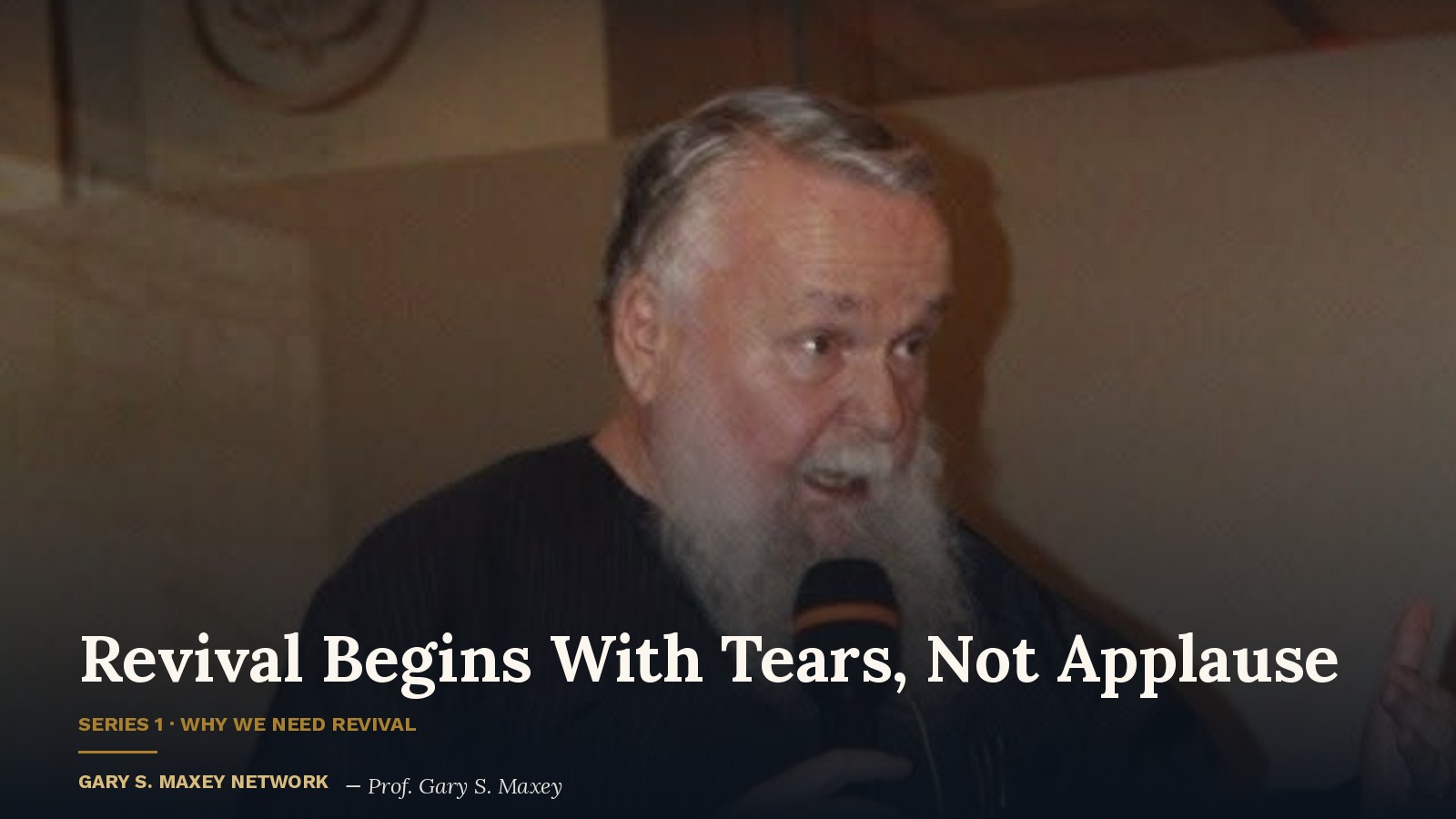
Revival Begins With Tears, Not Applause
Drawn from the teaching of Professor Gary S. Maxey · 3 min read
Some words have fallen out of Sunday vocabulary. Sin. Repentance. Confession. Restitution. Professor Gary Maxey observes that many modern pulpits avoid them because they sound negative. A congregation is told it should leave uplifted, and talk of sin is thought to chase people away.
He argues that this habit shuts the door on revival. Every revival he studied began with a deep sense of need and a conviction of sin. He writes plainly: there are no exceptions.
What the prophets heard
Isaiah told Israel what the people wanted to hear from their preachers. "Do not prophesy to us right things. Speak to us smooth things, prophesy deceits" (Isaiah 30:10). Jeremiah accused the religious leaders of treating a serious wound as a scratch. They cried "Peace, peace," when there was no peace (Jeremiah 6:14). Ezekiel said the same about leaders who seduced the people with comfort (Ezekiel 13:10).
These were not outsiders attacking the faith. They were prophets of God, troubled by a false sense of security sold to people in real spiritual trouble.
Why conviction takes time
Conviction of sin is a work of the Holy Spirit, and Professor Maxey notes that the Spirit does not hurry. It needs searching preaching of the Word, quiet thought, humility and a settled purpose. A hundred voices in the modern church say everything must happen now. We promise the crowd, "Tonight your problem will end." He calls this a revival killer, because people who come hoping for an instant solution stop listening for the Spirit's rebuke.
The deeper issue is how we have come to understand salvation. Many treat it as a mental transaction. Pray a sentence, receive assurance, move on. Professor Maxey says coming to Jesus is far more than a decision. We must come face to face with our lostness and our backsliding, and we must see and confess the sins weighing us down.
What it looks like when it begins
He gives two pictures.
In East Africa, white colonial officials grew impatient during the revival because so many Africans queued up to return what they had stolen. Bishop Festo Kivengere told the story.
In Bible colleges where Professor Maxey has taught, he knows a school is waking up when students come to the office without being called. They confess cheating on an exam, a forged admission document, or a petty theft. Nobody caught them. Only God knew.
A word for the person reading
The tears Professor Maxey describes are not self-hatred. They are the honesty of a person who has stopped defending himself. The Lord who convicts is the same Lord who forgives, and the sorrow he gives leads somewhere. Paul told the Corinthians that godly sorrow "brings repentance that leads to salvation and leaves no regret" (2 Corinthians 7:10).
If your prayer life has become routine, ask for a single thing this week. Ask the Lord to show you what you have stopped seeing. Then sit quietly long enough to hear him.
Drawn from the teaching of Professor Gary S. Maxey.