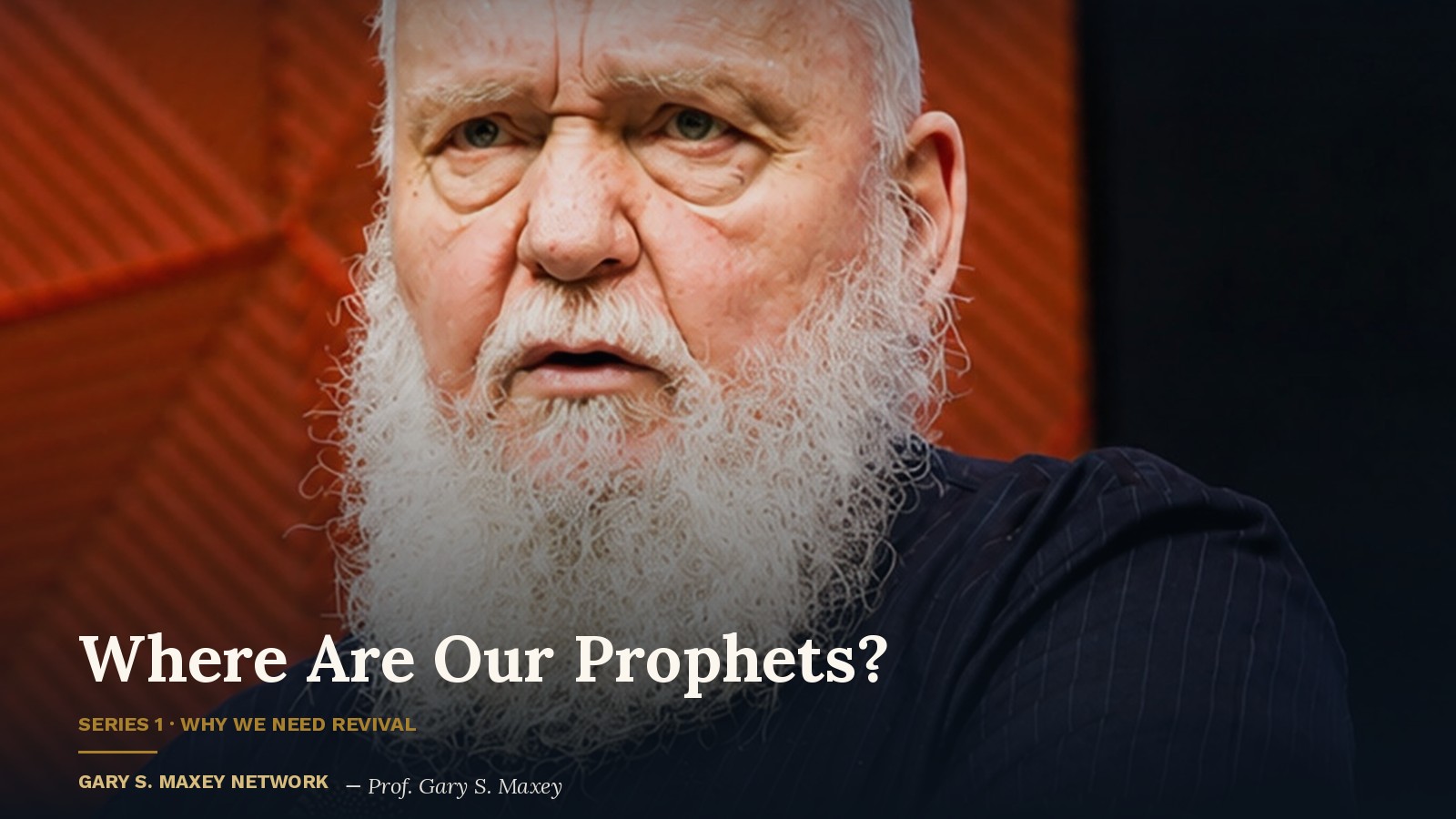
Where Are Our Prophets?
Drawn from the teaching of Professor Gary S. Maxey · 3 min read
For years Professor Gary Maxey has asked a question in his lectures and books. Where are the people in our day who preach the judgment of God against the sins of the African church? Where are the ones willing to attract anger in order to speak God's word to God's people?
He does not ask it to shame anyone. He asks because he believes revival will not break out again in Nigeria until such voices appear.
The kind of voice he means
He is specific, and he draws a line. He does not mean people who complain. Nigeria has no shortage of those, and he says everyone seems good at it. He does not mean critics who attack fellow pastors while their own lives carry no weight.
He means men and women whose lives match their preaching. They live humbly and show visible love. They carry the courage to say something unwelcome. Professor Maxey describes them as people of transparent godliness who speak out about the sins of the nation and the sins inside the church, and who have always been unpopular.
He points to Leonard Ravenhill, the English revivalist who died in 1994. Ravenhill's books were rough, direct calls to repentance, and he risked rejection for them. His line is still repeated: preachers make pulpits famous, but prophets make prisons famous.
The one-sided prophecy problem
Professor Maxey quotes Michael Brown, who notes that most prophecy today is positive. Words of coming blessing and rapid growth arrive one after another. Brown asks whether God might also be calling for a broken-hearted kind of prophecy. This kind feels God's pain over his people and invites them to share it.
The Old Testament offers plenty of both. The prophets announced blessing. They also wept over the nation's sin and warned of consequences. A prophet who only celebrates does half the job.
Why holy prophets are rare
Two things make them scarce. The first is cost. A pastor who names the popular sins of the congregation risks his income, his reputation and his friendships. The second is credibility. A preacher with secret sins cannot call others to repent without sounding false. Professor Maxey notes that the voices of people who lack godly character ring hollow, and listeners learn to ignore them.
That is why he places holiness first. A prophetic ministry begins in a private room, long before it reaches a pulpit.
Three questions for you
Ask these honestly.
1. Is there someone in your church who speaks hard truth with a gentle spirit, and who has paid for it? Have you encouraged that person? 2. When did you last sit under preaching that made you uncomfortable? Did you come back the next week? 3. Are you willing to become that voice in your family, workplace or fellowship, beginning on your knees?
Professor Maxey puts the last question to his readers directly. Am I willing to go on my knees and become that person? He offers no easy answer. He leaves the question standing.
Drawn from the teaching of Professor Gary S. Maxey.