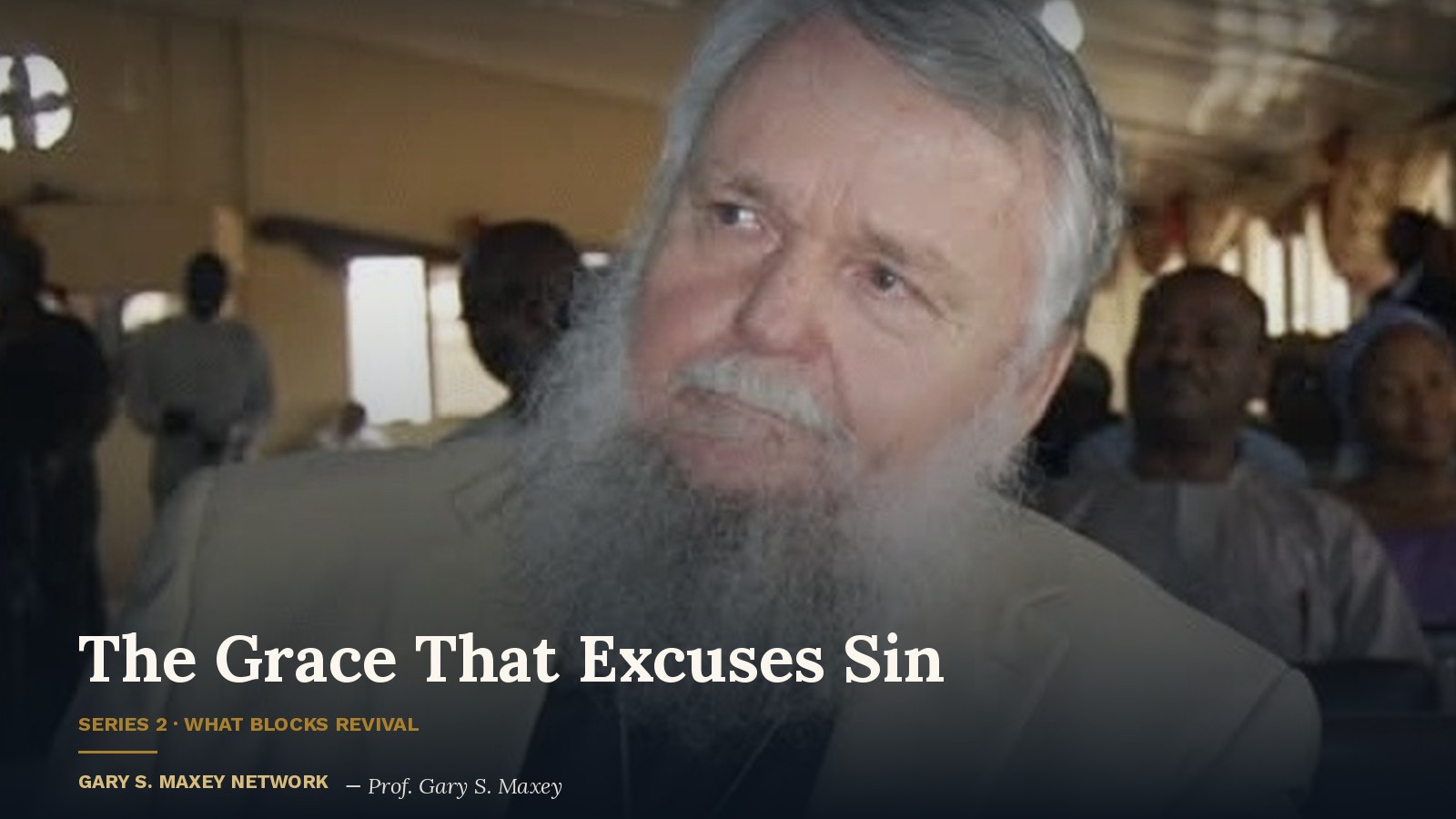
The Grace That Excuses Sin
Drawn from the teaching of Professor Gary S. Maxey · 2 min read
A message has spread through many churches in recent years. Once you are forgiven, it does not matter how you live. Christ's righteousness has been credited to you. God no longer sees your sin. You cannot be lost, whatever you do.
Professor Gary Maxey calls this the hyper-grace lie. In his book on the Highway of Holiness, he says Satan has foisted it on the church. His plain verdict is that it is false doctrine with no backing in the Scriptures.
Why it appeals
It sounds generous. It removes fear and it keeps the sinner comfortable. Professor Maxey explains how it takes root. Many believers have been told they will always be on a merry-go-round of sin and repentance. A person already convinced he cannot be free is a ready target for a teaching that says freedom is not needed.
What the Bible says instead
Professor Maxey points to John, who writes that whoever is born of God does not sin (1 John 3:9). He points to Romans 6, where Paul asks how those who died to sin can live in it any longer, and says repeatedly that believers have been set free and are no longer slaves.
He is careful about what he claims. Living above sin does not mean perfection in every sense. Saints still have weaknesses, errors and flaws that come from ignorance, prejudice, illness and weariness. They do not have a standing rebellion against God.
The root of the lie
Professor Maxey says many have lost sight of the biblical standard. They have taken on a legalistic and defeatist picture of Christianity, then reached for the opposite error. Both rest on one assumption: a believer cannot actually be made holy.
His answer is the cross. The cross does more than pardon. It makes people holy. Hebrews says Jesus suffered outside the gate to sanctify the people through his own blood (Hebrews 13:12). Holiness is not the result of trying harder. It is drawing on the life of Jesus, given by the Holy Spirit.
How this blocks revival
Revival begins with conviction of sin. A doctrine that says sin no longer matters removes the conviction at its source. Nothing is left to repent of, so nothing is brought to the light.
What to ask yourself
When you sin, does your doctrine make you sorry or does it make you shrug? Let the answer guide you. A soft conscience is not a symptom of grace. It is a symptom of something being switched off.
Drawn from the teaching of Professor Gary S. Maxey.