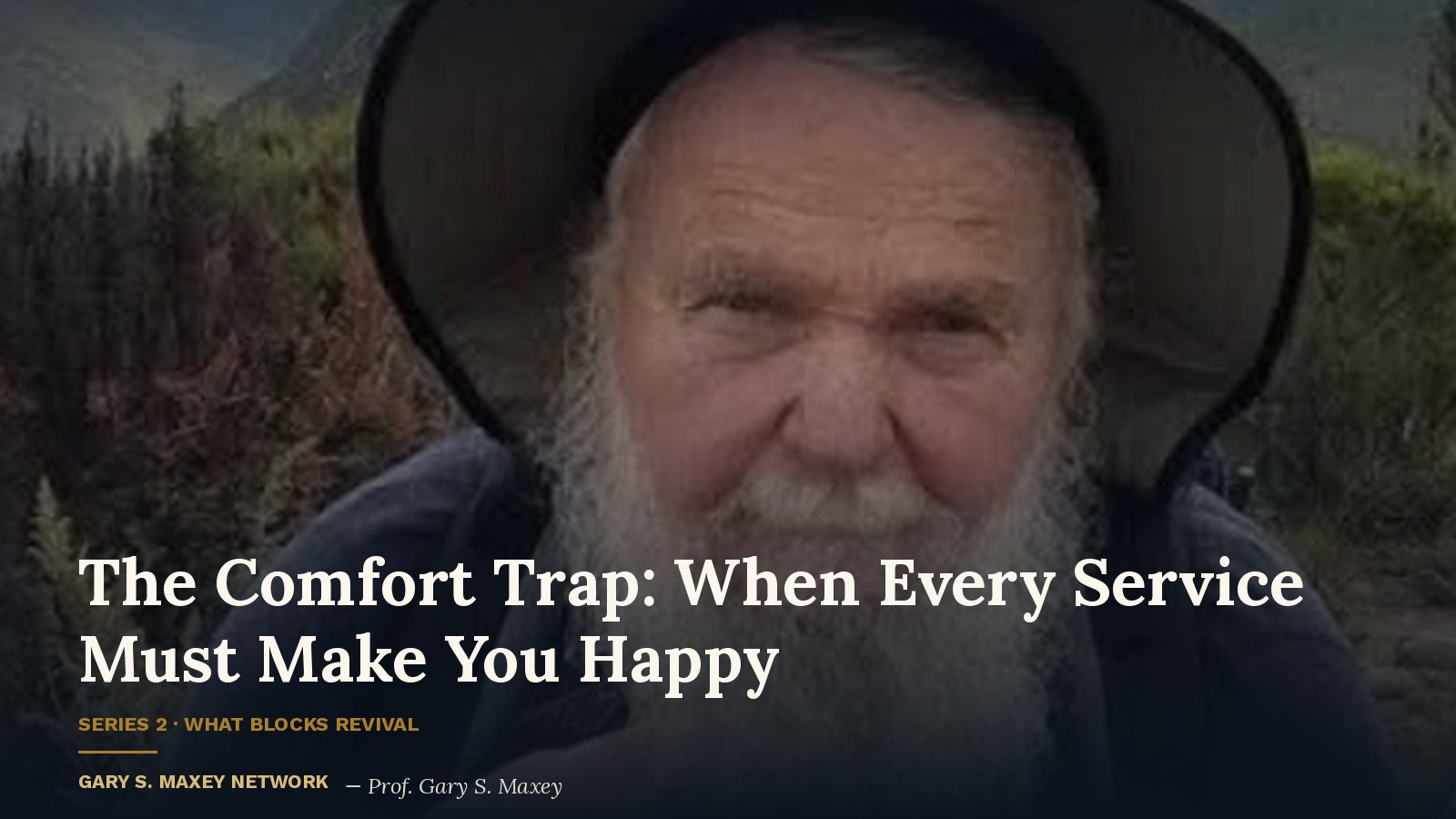
The Comfort Trap: When Every Service Must Make You Happy
Drawn from the teaching of Professor Gary S. Maxey · 3 min read
Walk into many churches on a Sunday and you will hear the same instruction. "If you are happy, shout Hallelujah!" The person who stays quiet is noticed. The person who shouts louder is praised. If the speaker says, "I can't hear you," the room obeys.
Professor Gary Maxey does not object to joy. He objects to what happens when joy becomes the only thing allowed in the room.
What he sees
In his book on why revival tarries in Nigeria, Professor Maxey describes a habit built up over years. We have taught ourselves that going to God's house must be an emotionally gratifying experience. We expect entertainment and pleasure. We expect displays of divine power. The last thing we want to think about is our deep need. We do not want to hear about sin, disobedience or lukewarmness. We cannot stand to be told we have backslidden.
He calls this crowd manipulation and self-congratulation. He says it pushes the church in the opposite direction from revival.
Why it blocks revival
Revival, as he defines it, is preceded by a deepening sense of spiritual need, by conviction of sin and by earnest prayer. A service built to keep everyone feeling good removes all three. No one is asked to look at himself. No one is given room to be sorry.
The trap is quiet. Nothing in it looks like rebellion. The music is good, the people are friendly and the preaching is warm. Yet the congregation leaves each week with a stronger belief that all is well.
The prophets saw it first
Professor Maxey points to Isaiah, Jeremiah and Ezekiel. Isaiah said the people told the prophets, "Prophesy to us smooth things" (Isaiah 30:10). Jeremiah said the leaders healed the wound of God's people slightly, crying "Peace, peace," when there was no peace (Jeremiah 6:14). Ezekiel said they had seduced the people with the same word (Ezekiel 13:10).
These prophets were troubled by a false security sold to people in real spiritual trouble. Professor Maxey names a modern version as one of the greatest hindrances to revival: the idea that we must always be in a good mood and always smiling in God's presence.
What he does not say
He does not say a church should be gloomy. He says God desires to bless his people, and God is also holy. He hates sin and he hates backsliding. He calls his people to revival first by confronting their need.
A test for your own Sunday
Ask yourself three plain questions. When did a sermon last make me uncomfortable? When did I last leave a service sober instead of excited? When did I last bring a specific sin to God in a service and leave it there?
If the answers are "I cannot remember," the trap has closed on you. Begin this week with one request. Ask God to let you feel what you have been shouting over.
Drawn from the teaching of Professor Gary S. Maxey.