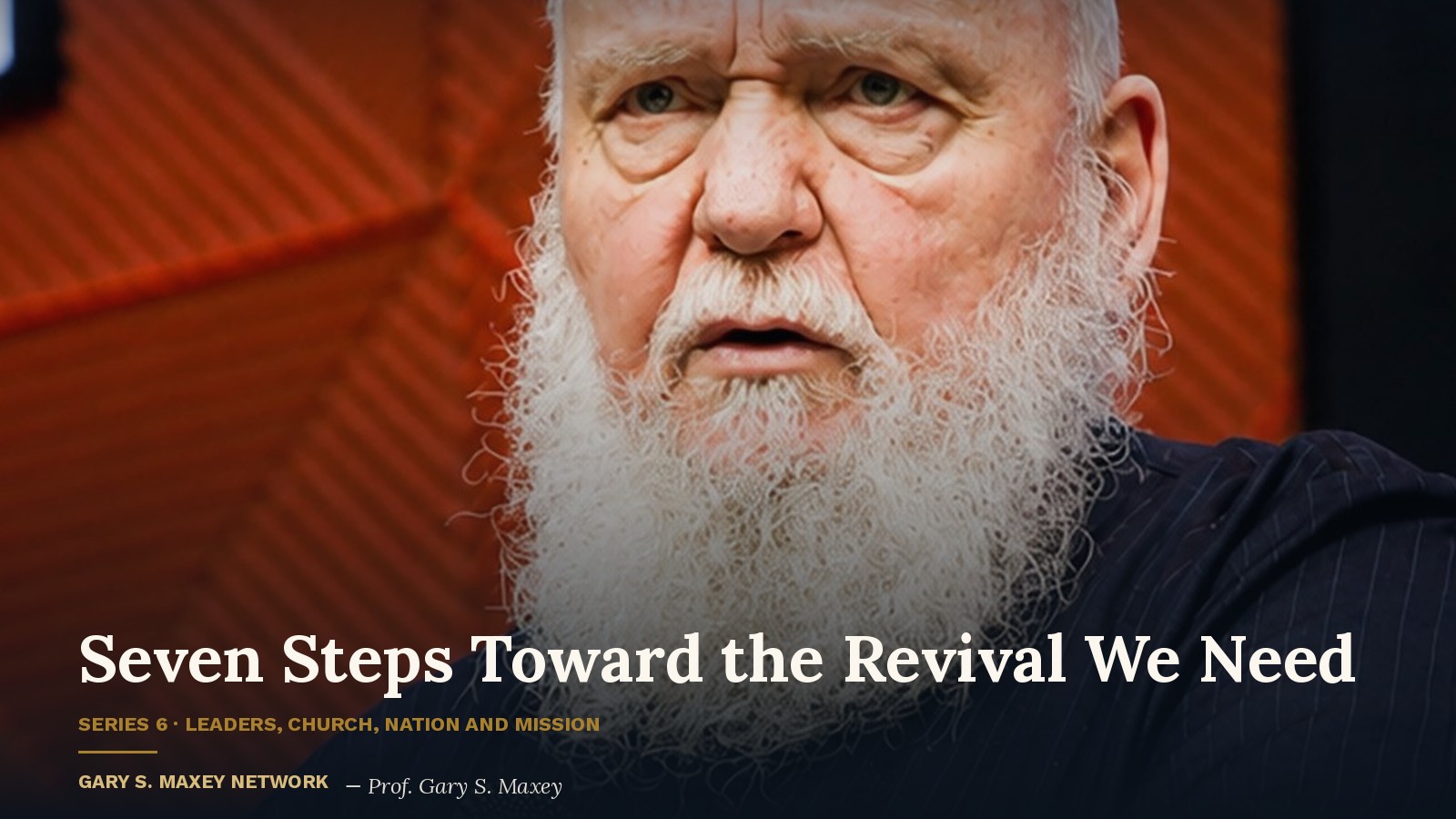
Seven Steps Toward the Revival We Need
Drawn from the teaching of Professor Gary S. Maxey · 2 min read
Can a nation prepare for revival? Professor Gary Maxey answers with care. He knows God is sovereign. He does not claim we can dictate where revival begins or how far it spreads. Yet he also knows God answers prayer, and has given conditions that call for action on our part.
The foundation
He builds on 2 Chronicles 7:14. If God's people humble themselves, pray, seek his face and turn from wicked ways, then God will hear, forgive and heal the land. In his closing message in the book on why revival tarries in Nigeria, Professor Maxey offers seven steps, to be taken individually and together.
The steps as he gives them
One: owning the need. Revival cannot begin without a conviction of need.
Two: clearing the ground. False teachings must be removed. He says we need to burn some idols.
Three: coming together. He draws on Joel's call for a sacred assembly and says strong collective determination matters.
Four: focused praying. Prayer that goes beyond words and noise, with personal confession.
Five: seeking God's face. Persistence. Revival can take days, weeks, months or years.
Six: turning from wicked ways. Prayer without repentance is a waste of time.
Seven: hunger for deeper sanctification. Revival leads believers into a deeper work of the Spirit, the cleansing Paul prays for in 1 Thessalonians 5:23.
The ending of each step
Professor Maxey closes each section with the same line. "Oh God, send down the revival we so greatly need!" It tells us what kind of steps these are. They are not a program. They are the posture of people asking.
Why it matters
Many Christians think revival is something to wait for, like weather. Others think it is something to produce, like a crop. Professor Maxey holds that both mistakes cost us. We cannot command it. We can stop resisting it.
Using the list
Pick a step that you have never taken. Go through the others later. If you lead a group, ask them to name the one where your church is weakest. Do not argue about the answer. Begin there.
Drawn from the teaching of Professor Gary S. Maxey.