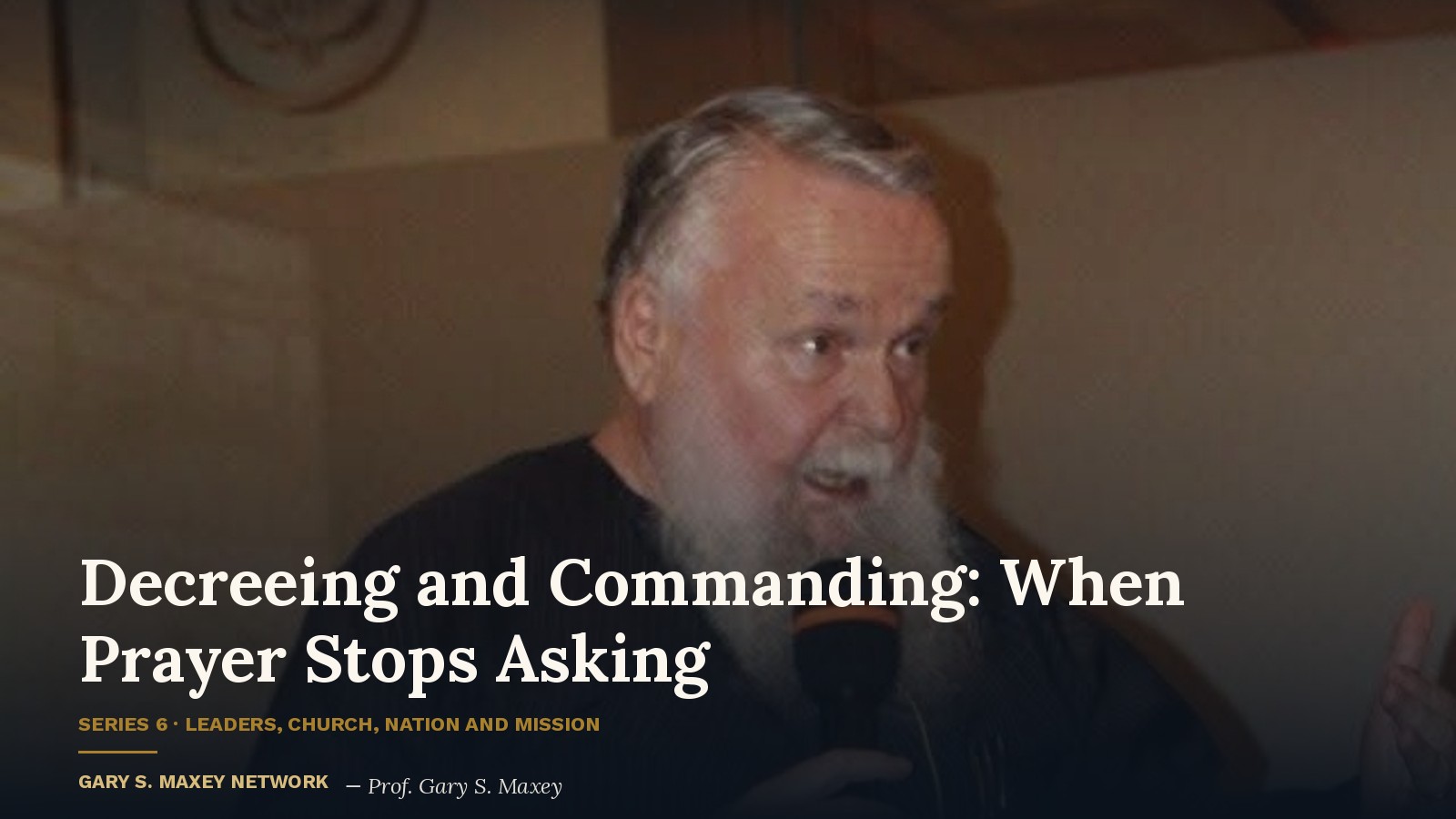
Decreeing and Commanding: When Prayer Stops Asking
Drawn from the teaching of Professor Gary S. Maxey · 2 min read
"I decree that there shall be no accidents on the roads as our people return home." It sounds like faith. Professor Gary Maxey hears something else in it.
Two kinds of prayer
In his book on why revival tarries, Professor Maxey describes what he calls horizontal prayer. Biblical prayer, he writes, is directed to God. We call on infinite power and wisdom to meet human needs, aware of our limits. In former days, a congregation would pray at the close of a meeting, "Heavenly Father, we ask for your mighty arm of protection to surround our people as they travel home." Today, he says, many of us cut it short by decreeing and commanding.
His assessment is sharp. Whether we mean to or not, we have told God we are in charge. He may take a holiday while we handle things.
Where it comes from
Professor Maxey connects this with a self-focused age. He says prayer has become less about worship, intercession or submission, and more about receiving or demanding. He names Kenneth Hagin's How to Write Your Own Ticket with God as an example of the Word of Faith approach. The prosperity gospel, he says, has taught us that God is a genie in a bottle or a celestial houseboy.
He points the reader to an extended discussion of the question in Juju vs. Christianity, which he wrote with Umar Danfulani.
The older pattern
He remembers an earlier time. People went on their faces as they discovered the depth of their backsliddenness. They cried out day and night for mercy and restoration. They often lost their appetite for food. Their prayers were those of true penitence before an offended God.
His conclusion
Revival will not come, he writes, to people who are praying more and more of the wrong prayers. We must turn back to a time when prayer was penitent prostration before God and a humble willingness to hear his voice.
What to change
For one week, replace every command in your prayers with a request. Say "Father, please" in place of "I declare." Notice what that does to your tone and to your sense of who is speaking to whom.
Drawn from the teaching of Professor Gary S. Maxey.