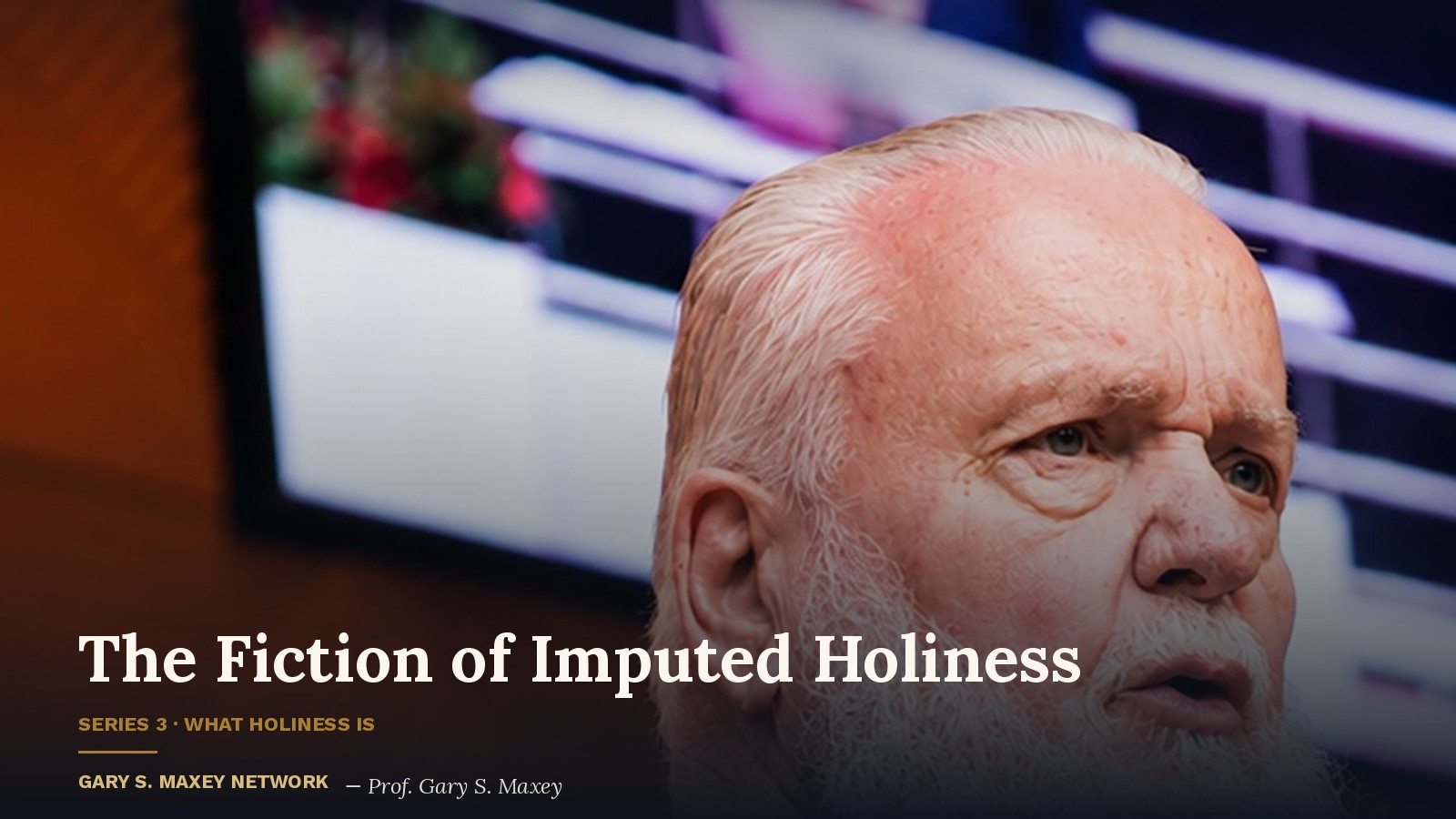
The Fiction of Imputed Holiness
Drawn from the teaching of Professor Gary S. Maxey · 2 min read
Some teachers say God looks at a believer and sees only Christ. The believer may be impure and unchanged, but he is covered. Professor Gary Maxey names this teaching imputed holiness and calls it a fiction. He calls it false and dangerous.
How he describes its origin
In his book on the Highway of Holiness, Professor Maxey argues the idea grew from a problem. Church theologians following the later Augustine believed no one could be freed from sin in this life. Yet the New Testament clearly promises holiness. How could the two fit?
The Roman Catholic answer was purgatory, a place of cleansing fire after death. Professor Maxey says this has no basis in revelation. Luther and Calvin rejected purgatory, and then, he says, they created imputed holiness in its place. In this view, God clothes the believer in Christ's righteousness so that, while the believer stays unholy in reality, God is unable to see anything but Christ.
Why he calls it dangerous
The first danger is a lowered standard. If God sees only Christ, there is little reason to pursue a cleaner life. Professor Maxey says this is the teaching that has been taken up by the modern hyper-grace movement in the Nigerian church.
He reports that Luther told a troubled seminarian, "Pecca fortiter," meaning "Sin boldly." In Professor Maxey's telling, Luther's advice came from his belief that believers are covered and need not worry about continuing in wilful sin.
What Paul wrote
Professor Maxey points to Ephesians 4:22-24. Paul tells believers to put on the new self, created to be like God in true righteousness and holiness. His emphasis falls on the words true and real. He says this is not fake, not legal but not real, and not imputed but never lived out.
A fair note
Readers from Lutheran, Reformed and other traditions will disagree with Professor Maxey's account of the Reformers and of their teaching. That is reason to check his claims against the sources and think carefully. It is not a reason to ignore the question underneath. Does God make people holy, or does he only declare them so?
What to do
Read Titus 2:11-14 and 1 John 3:2-3. Write down what each says grace does. Ask whether your own view of grace includes change in how you live, and ask God to widen it where it does not.
Drawn from the teaching of Professor Gary S. Maxey.